Pular para o conteúdo

Autism care in your network now has an owner, a stage and a deadline. Is your administration ready?

Lucca coordinates the ASD care pathway in the public network, from the front door to the plan at home. Risk-ranked waiting list, one plan per child and the data in the hands of whoever answers for the network. Without replacing the e-SUS.

  • Waiting list ranked by risk with validated instruments
  • Care plan and special-education plan: AI proposes, the team decides
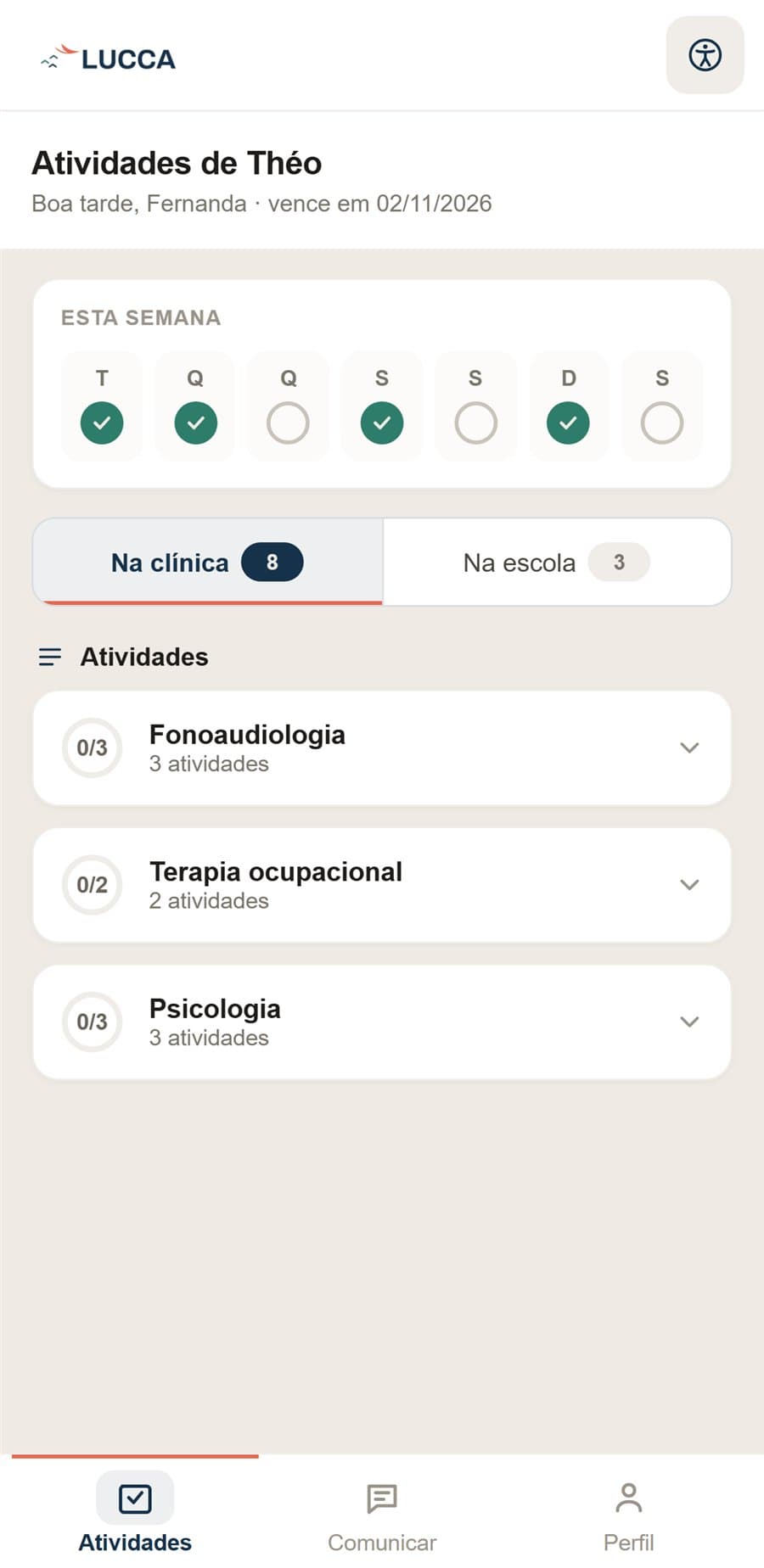
  • The family carries out the plan at home on their phone
  • Waiting list, output and progress ready for accountability
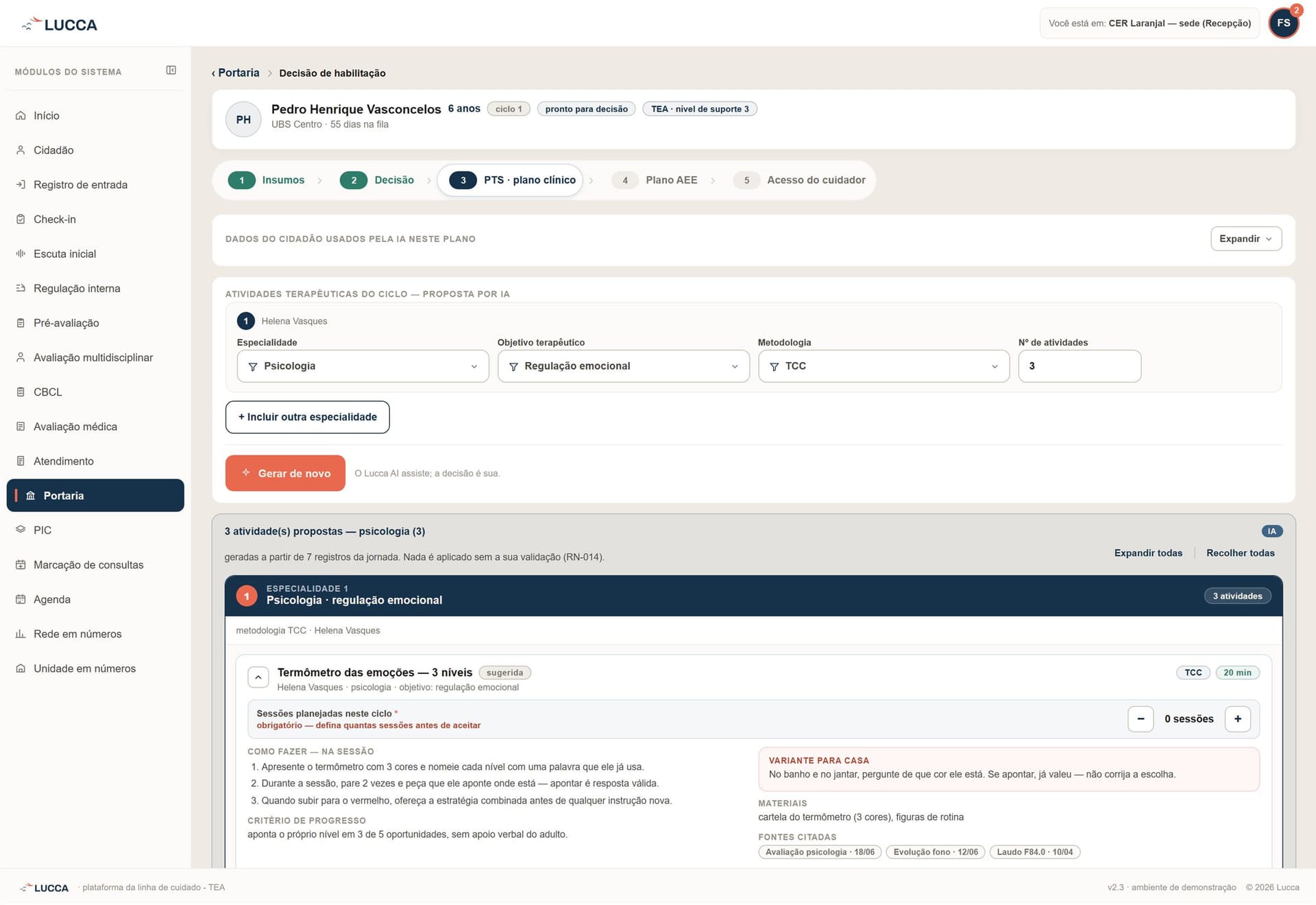
Lucca's Portaria screen at the clinical plan stage: therapeutic activities proposed by AI, each with its source, for the team to accept, edit or reject

The problem

The autism journey is still fragmented.

There are 2.4 million Brazilians with an autism diagnosis, 1.2% of the population. Among children aged 5 to 9, 2.6% (IBGE, 2022 Census).

56%

of first signs noticed by the family · Mapa Autismo Brasil 2026

No screening, no prioritisation

Every child joins the same queue. The municipality cannot tell who needs care first, and severe cases get lost among mild ones. Doctors notice only 7.3% of the first signs.

See the answer

11 years

average age at diagnosis · Mapa Autismo Brasil 2026

Late diagnosis

The diagnosis comes years later, and many only receive it in adulthood (21.6%), when the most important developmental window has already closed.

See the answer

39,9%

receive no support at school · Mapa Autismo Brasil 2026

Disconnected departments

The school works without the clinical information, and health has no idea what happens in the classroom. Social services are left out of the flow too.

See the answer

34,3%

of families have no support network day to day · Mapa Autismo Brasil 2026

Family without guidance

The caregiver drops off and picks up, but does not know what to do at home. For more than half, therapy takes up at most 2 of the 168 hours in a week.

See the answer

How Lucca works

Four stages, from the front door to accountability.

Each stage says who does it, what comes out, where it is recorded and which breakdown it solves. The screens are from the live system, with fictional demo data.

Reception + Regulation

Front door and risk-ranked queue

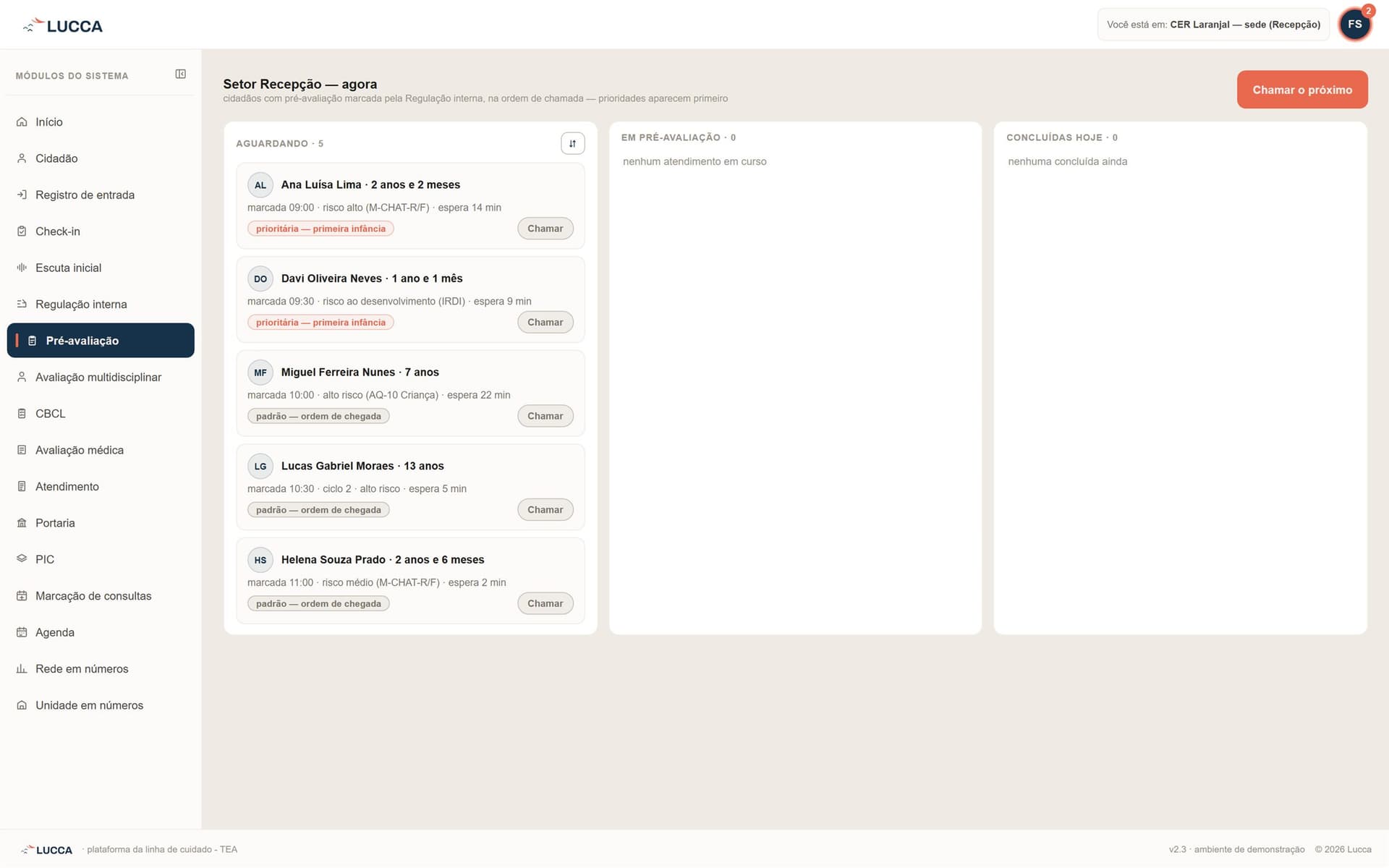
The family enters via their phone or the professional applies it at the unit: M-CHAT-R/F and AQ-10 inside the platform. Risk is classified by an auditable engine and Regulation sets the calling order. Children waiting too long with high risk are no longer discovered by chance.

Guided screeningRisk-ranked queueActive outreach

SolvesNo screening, no prioritisation

Pre-assessment screen: the unit's queue with cases ranked by risk and early-childhood priority

Multidisciplinary team + assistive AI

Assessment, report and plan: AI proposes, the team decides

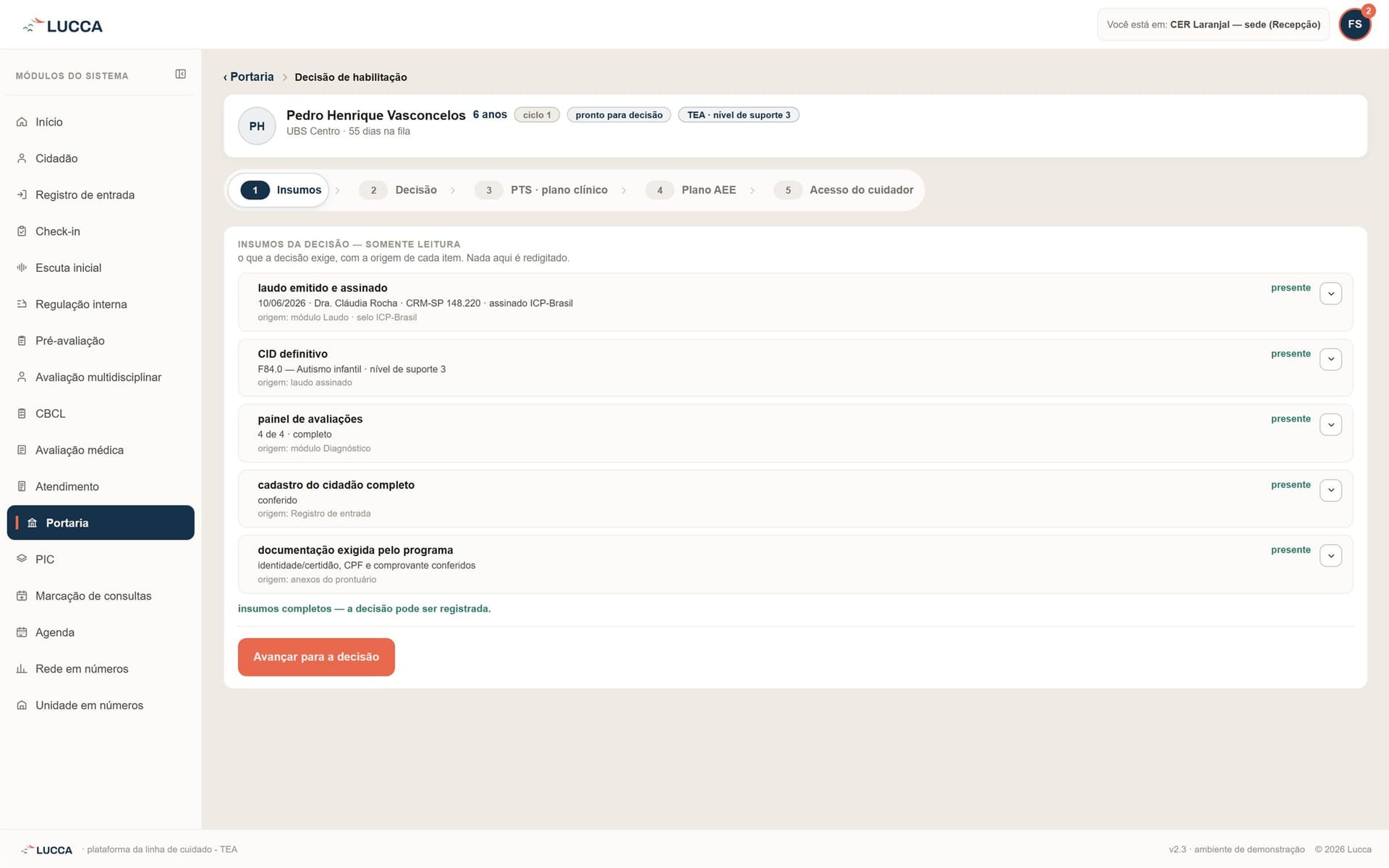
Every specialty records in the same place and the family does not repeat the story. The physician closes the diagnostic report backed by the whole team, and every input to the decision shows its recorded origin: nothing is retyped, and whoever takes over the case gets the full history. In the Portaria module, AI proposes the cycle's activities citing the source of each one; the professional accepts, edits or rejects. Once validated, it becomes the child's single plan, with validity period and version history.

The child's digital twinEvery suggestion cites its sourceNothing goes in without validation

SolvesLate diagnosis

Portaria screen, Inputs stage: signed report, final ICD code, assessment panel and verified registration, each with its recorded origin and nothing retyped

Family + school

The plan reaches home and the classroom

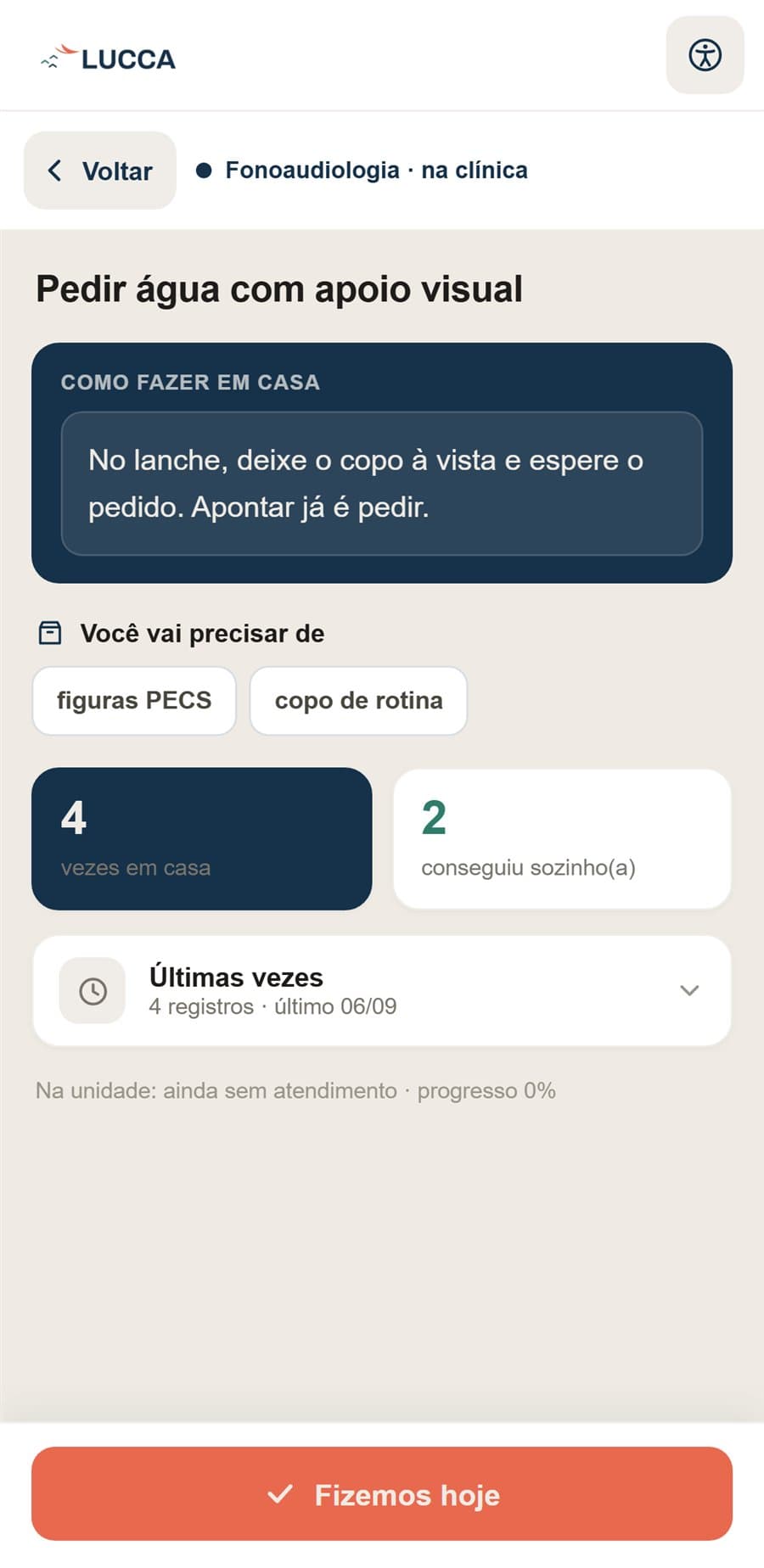
The week's activities go to the caregiver through the app, with step-by-step instructions in plain language. The family ticks "done today", logs crises and wins, and the team sees it before the next session. The school receives the special-education plan translated for the classroom, and what it observes feeds back into the clinical decision.

Family appLogged in secondsCrises heard right away

SolvesDisconnected departmentsFamily without guidance

Family app: speech therapy activity with step-by-step instructions for home, materials and the Done today button
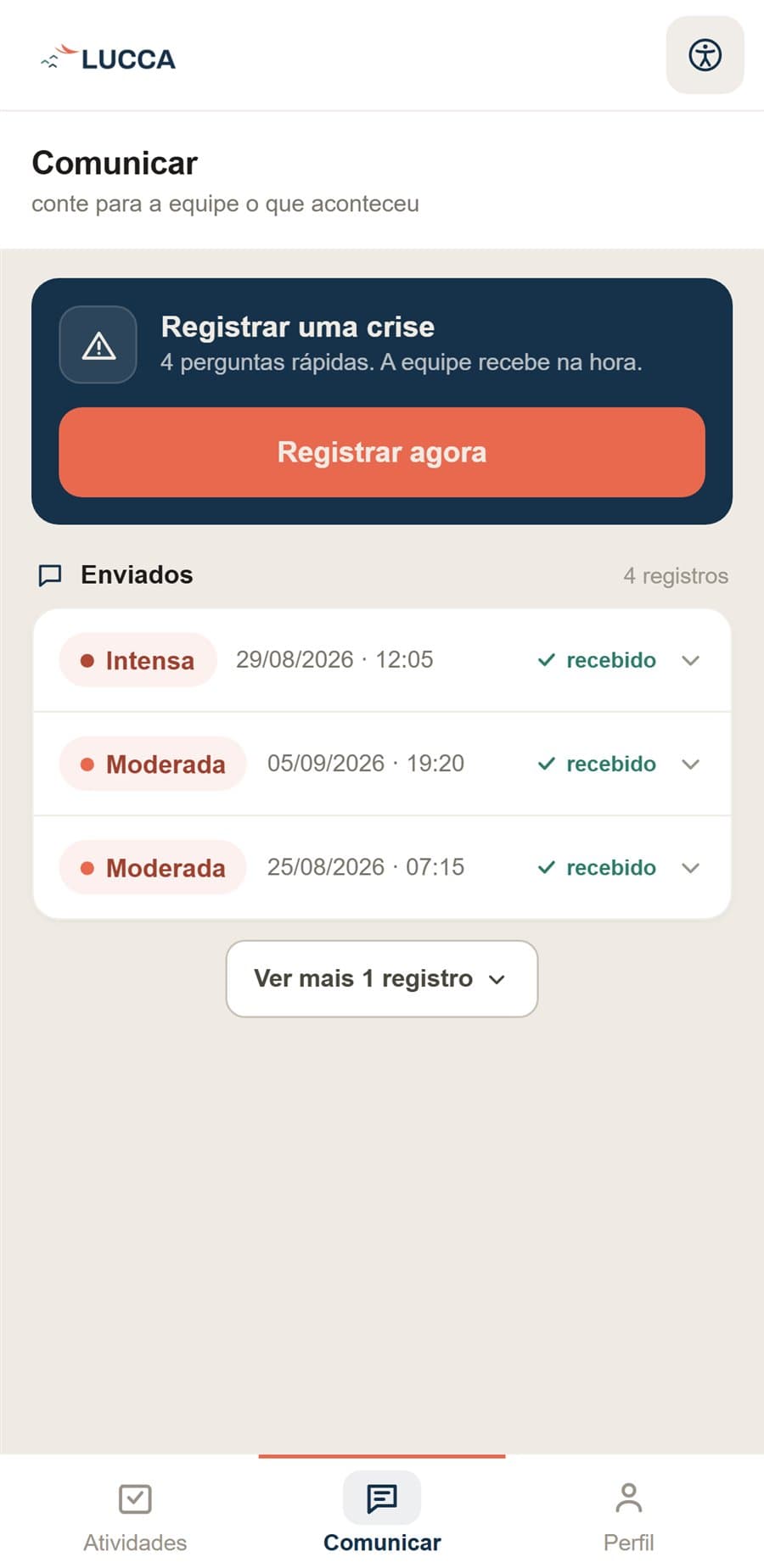
Family app: Communicate screen with the Log a crisis shortcut and the entries sent

Management and coordination

Management dashboard and accountability

Queue by stage, output, progress measured by instrument and family participation, all updated by the operation itself. When the Public Prosecutor or the Court of Accounts asks who decided what, and based on what, the answer is already on record.

Queue and output by unitProgress by instrumentAuditable history

SolvesManagement without visibility

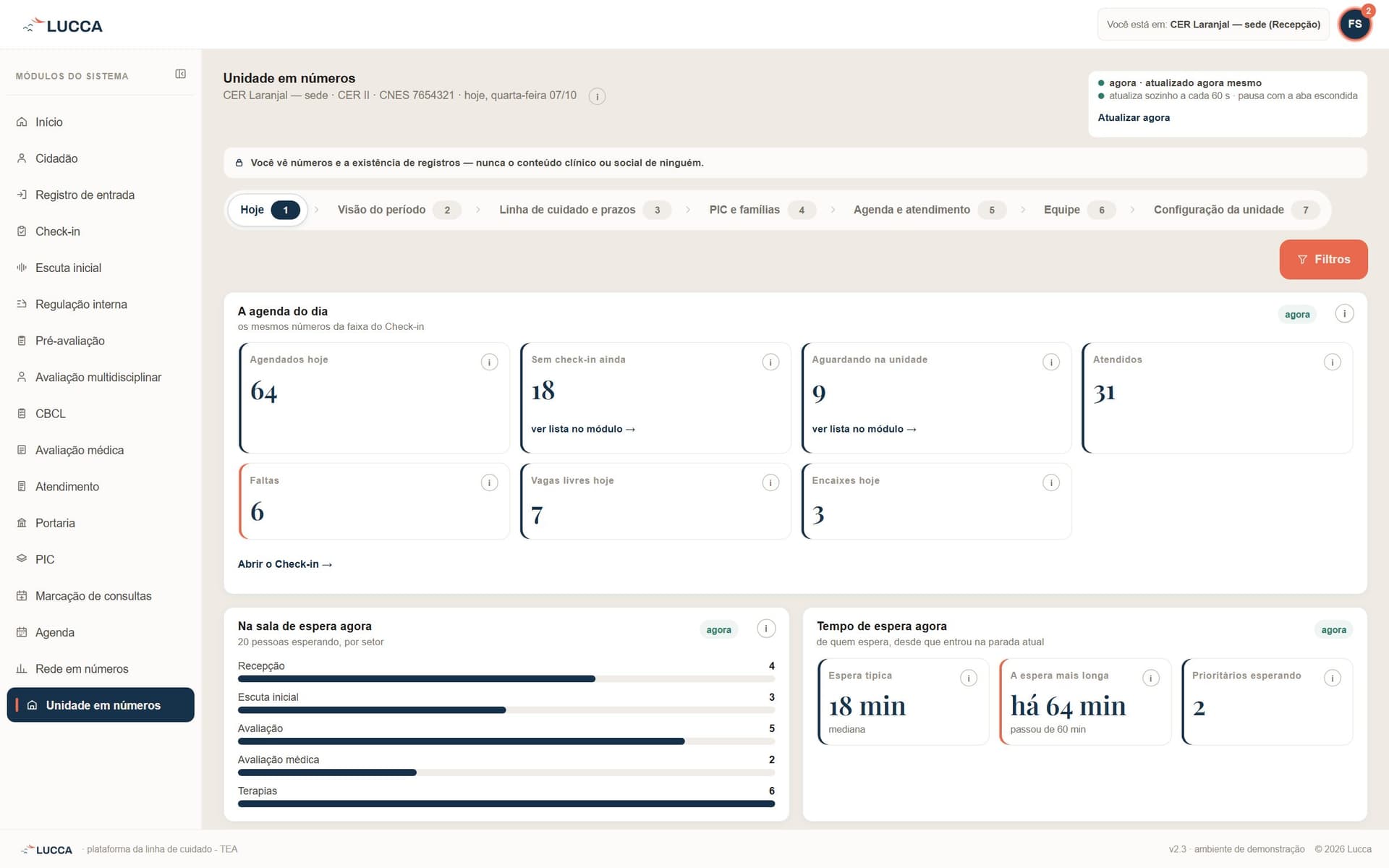
Unit in numbers screen: the day's schedule, waiting room by unit and waiting time, updated live

AI with human decision

AI proposes. The team decides.

Every child gets a digital twin: the full history, organised by Lucca's AI and accessible to the family and the professionals. AI proposes the plan citing its source; the team decides.

Portaria screen at the clinical plan stage: activities proposed by AI, each with its source, for the team to accept, edit or reject
  1. 1

    No answer without a source

    Without an approved document in force, the AI refuses to generate. Every suggestion cites the evidence behind it: assessment, progress and report.

  2. 2

    Blocking human validation

    The AI never closes a diagnosis, report or treatment decision. Nothing becomes a plan before the team accepts it.

  3. 3

    A draft, not a decision

    Report, care plan and special-education plan come out as a draft the professional reviews and signs, anchored in the institution's own protocol.

  4. 4

    Rejection with a trail

    A rejected draft records the reason and feeds continuous improvement. Every change keeps author and date.

What this rests on

Legal and technical foundations, stated.

Aligned withLGPDGDPRHIPAA

Legal basis

  • Law 12,764/2012 (ASD Policy)
  • Law 13,146/2015 (Inclusion)
  • LGPD, with versioned consent
  • Law 14,133/2021 (procurement)

Technical and scientific basis

  • M-CHAT-R/F, AQ-10 and CBCL
  • Criteria from the DSM-5
  • FHIR and RNDS, integrated with e-SUS
  • CID-10 and SNOMED

AI in the service of care

  • A digital twin for every child
  • Every suggestion cites its source
  • Human validation required
  • Never closes a diagnosis or report

Security and governance

  • Data anonymised before the AI
  • Access by capability and MFA
  • Immutable log, with a trail
  • Consent and signature with ICP-Brasil

Results

Who already trusts Lucca.

Ahimsa Institute · São Paulo

Serves people with Autism Spectrum Disorder, deafblindness and multiple sensory disabilities, with a Special Education School, a Specialised Educational Service Centre, family support and health services. Lucca has been running at the institution since September 2026.

2h15 mintime to draw up a special-education plan

São João de Meriti · Rio de Janeiro

Public health network in the Baixada Fluminense. Lucca has been running at the Municipal Health Department since September 2026, coordinating the ASD care pathway: screening with a risk-ranked queue, multidisciplinary assessment, diagnostic report and therapeutic plan in a single record, integrated with e-SUS.

Public health networkIn operationLaw 14,133/2021

Science and partnerships

A stated scientific basis, partnerships with those who do research.

Validated instruments, criteria from the DSM-5 and progress measured by instrument, with academic partnerships in artificial intelligence applied to health.

UERJ

UERJ

Rio de Janeiro State University.

PUC-Rio

PUC-Rio

Teaching and research in AI applied to health and mental health.

Naval War College

Naval War College

Research in artificial intelligence and the internet of things.

Frequently asked questions

Common questions about Lucca.

Does Lucca replace the e-SUS or the health record the network already uses?
No. Output keeps being recorded where it already happens: e-SUS APS, the municipal health record or your own system. Lucca adds on top the coordination layer that none of them offers, with native FHIR and RNDS. No migration, no system swap, no duplicate records.
So is Lucca an electronic health record?
No. It is the child's digital twin: a single record, with Lucca's AI supporting clinical, educational and social decisions, accessed by the family and the professionals. Recording is not coordinating: Lucca organises the queue, the path, the deadline of each stage and the information that reaches each person.
Does the artificial intelligence make decisions about the child?
Never. The AI organises the history and proposes activities and drafts, always citing the source. The professional accepts, edits or rejects with a reason. Human validation is blocking, and the platform never closes a diagnosis, report or treatment decision.
Is a diagnostic report required for a child to join the queue?
No. The front door is screening with validated instruments, by the family on their phone or by the professional at the unit. The report is a stage in the journey, closed by a qualified professional, not a condition for care to begin.
How does the school take part?
The special-education plan is born from the therapeutic plan, with AI support, and the special-education professional reviews and approves it. The school receives the clinical information translated for the classroom, and the school's feedback returns to the child's record.
And the family?
Through the app, the caregiver receives the week's activities with step-by-step instructions, ticks what was done, logs crises and wins and sees the journey in plain language. They tell the story only once.
Where is the children's data kept?
In an environment isolated per municipality, with access by capability rather than job title, mandatory MFA for the team and an immutable log. Personal data is anonymised before any call to an AI model; if anonymisation fails, the system stops.
How much does it cost and how is it contracted?
The price is per registered patient, with tiers by network size. Public networks contract under Law 14,133/2021, and we support your team with the technical documentation. A thirty-minute conversation comes before any proposal.
How long does rollout take?
Usually four weeks, with a technical meeting, a network snapshot and a pilot with go-live subject to approval. The first two stages happen before the municipality contracts anything.
Does it work on a phone?
Yes. The family app is designed for the phone, with no app-store install, and the team's screens work on any device.

Book a demo

See Lucca applied to the reality of your network.

Thirty minutes live, no strings attached. Pick a day and a time, and we prepare the demo with your queue, your units and your workflows.


SUNMONTUEWEDTHUFRISAT